2 x Adams and the Power of the Question
What do an interstellar hitchhiker with a towel (don’t forget: May 25th is Towel Day!) and the founder of the “Inquiry Institute” have in common? At first glance, nothing. At second glance, their surname. And at third glance – and this is where it gets interesting – a deep understanding that the truly important things in life begin with a question.
In The Hitchhiker’s Guide to the Galaxy, Douglas Adams sent the supercomputer Deep Thought on a quest for the ultimate question’s answer – only to discover that without the right question, even the most brilliant answer (“42”) is utterly meaningless. Meanwhile, Marilee Adams stayed on Earth and found: If you want to change your life, you don’t need a new answer – you need a new question.
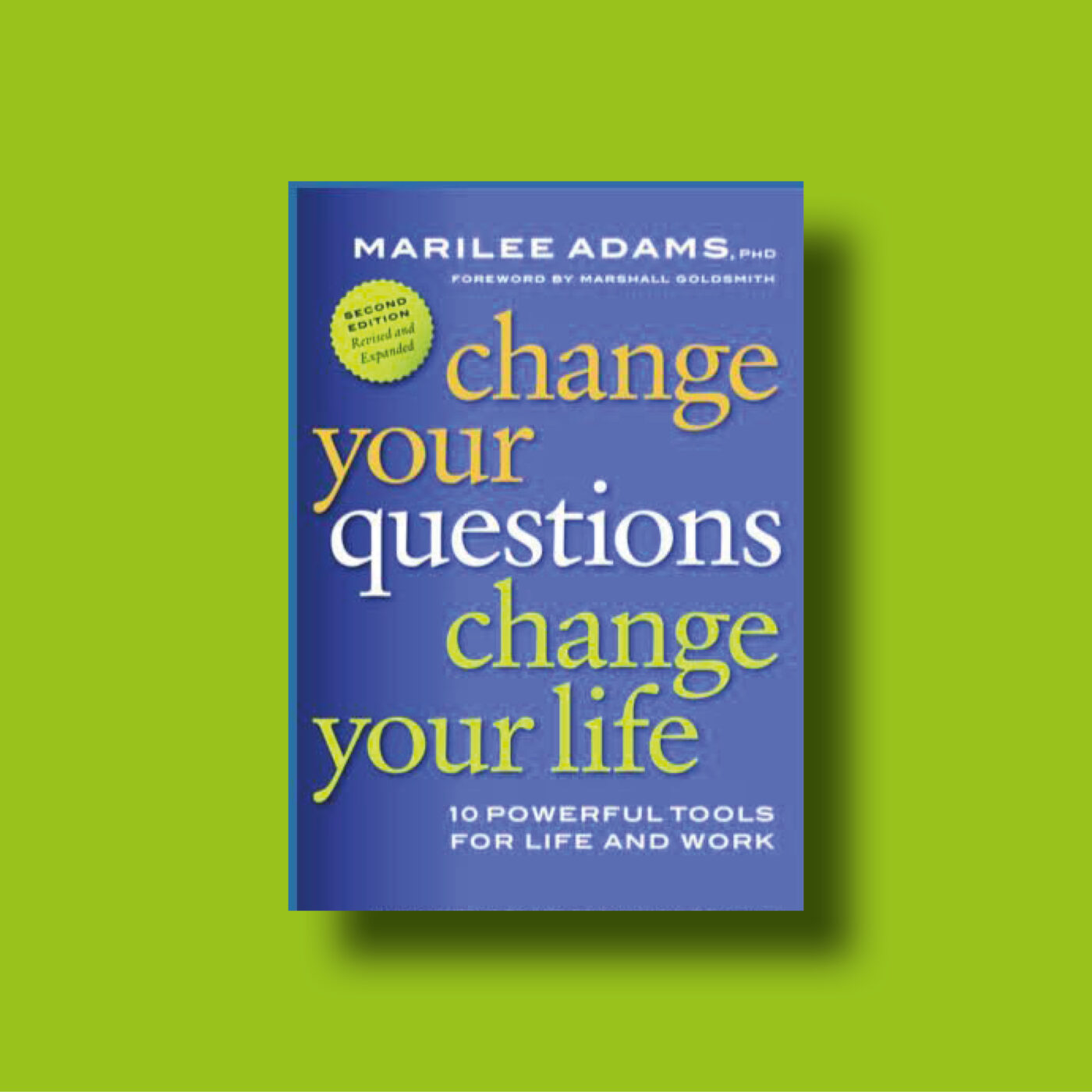
Questions are powerful. They structure our thinking, influence our actions, and often determine the course of our lives. Literature offers countless iconic questions that delve into human existence, philosophy, and society. Marilee Adams builds on this idea in her book Change Your Questions, Change Your Life and applies it to personal and professional growth: The quality of our questions determines the quality of our lives.
The “Right” Questions: The Core of Adams’ Philosophy
Marilee Adams distinguishes fundamentally between two mindsets: the “Judger” and the “Learner.” The “Judger” asks judgmental, limiting questions like: “What’s wrong with me?” or “Why are others so incompetent?” (a transactional analyst would immediately spot the drama triangle at work). The “Learner,” on the other hand, asks: “What can I learn from this?” or “What are my options?” The central thesis of her book is this: If we learn to consciously ask constructive, open, and solution-oriented questions, we can positively transform our thinking, relationships, and lives.
The Ultimate Question: Searching for Meaning in an Absurd Universe
Douglas Adams’ The Hitchhiker’s Guide to the Galaxy takes us to perhaps the most profound exploration of questions: the “ultimate question of life, the universe, and everything” remains unknown – only the answer is “42.” The punchline is brilliant: An answer without the right question is meaningless. The book satirizes, with biting irony, the absurdity of seeking answers without clarity on the questions themselves.
Here is where science fiction satire meets Marilee Adams’ fundamental insight: It’s not the answers that change our lives – it’s the questions. If we ask the wrong questions (e.g., “What is the meaning of everything?” without context or personal relevance), even seemingly profound answers feel hollow. The “Deep Thought” supercomputer would likely earn Adams’ approval: Only when we truly know what we want to know does it make sense to seek answers.
Conclusion: Questions Are More Than Words – They Are Pathways
Marilee Adams offers her book as a kind of manual for the art of questioning. She shows that it’s not just about what we ask, but how and why we ask. A good question opens doors; a bad one closes them. In this sense, we can reinterpret Hamlet or even Deep Thought – not as victims of their circumstances, but as travelers on a journey toward better questions.