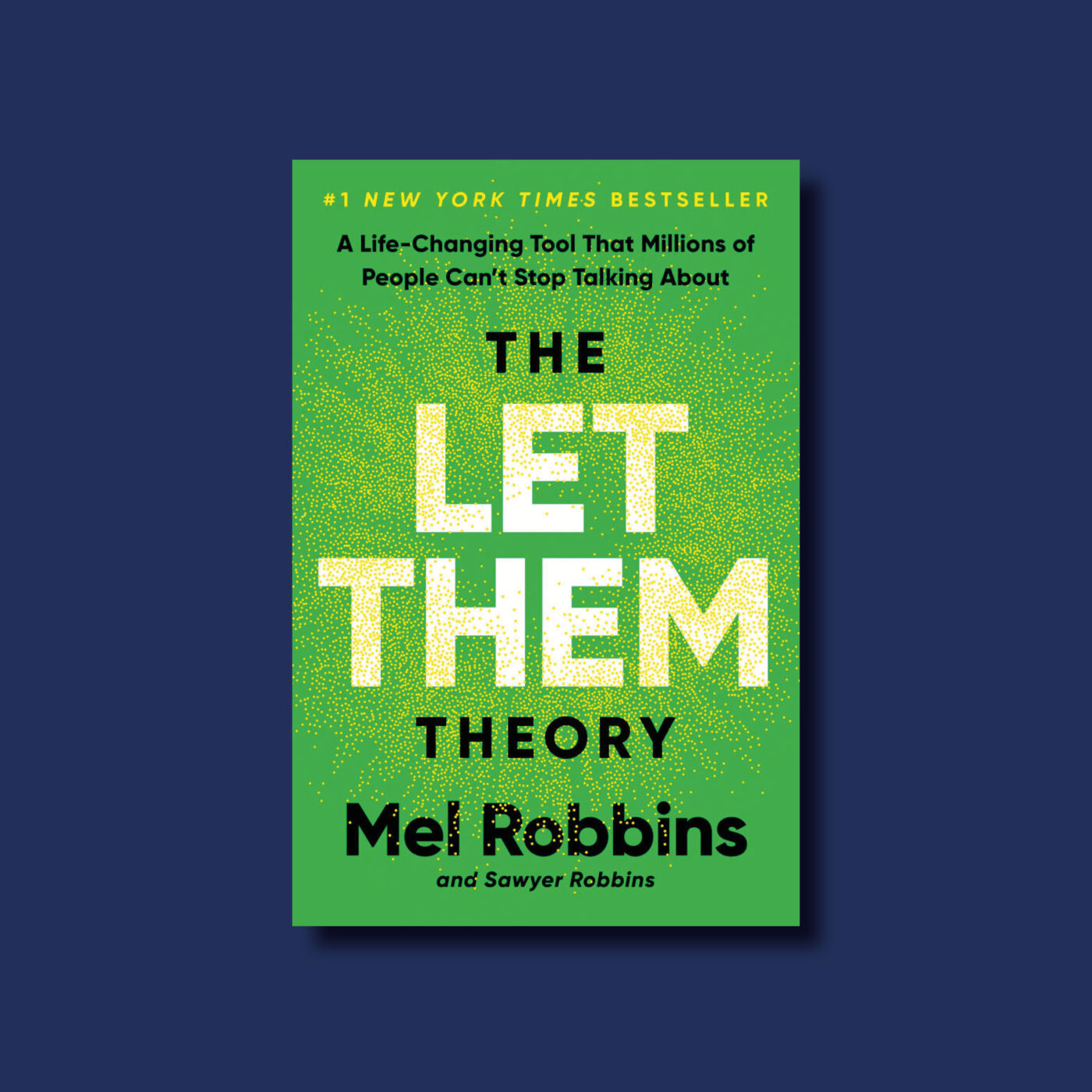
“Two Simple Words Will Change How You Think About Your Entire Life,” promises the book’s cover. I would argue it’s more like four words: Let Them and Let Me – two catchy phrases for emotional self-regulation.
As in her previous work, The 5 Second Rule, Mel Robbins presents a method for self-management. The value of her new book doesn’t lie in the originality of its concept but in the simplicity and affirming power of its key phrases. Instead of relying on complex theories, Robbins uses straightforward guiding words that stick in your mind and are easy to integrate into daily life.
In her typically accessible style, Robbins provides direct instructions and clear advice. Her signature phrase, “Sorry to break it to you…,” exposes excuses and self-deceptions, while humor and motivational anecdotes soften her occasionally evangelical tone and encourage readers to tackle personal challenges.
The “Let Them Theory” is structured into chapters that explore different facets of the topic – from fear of others’ opinions to the desire to change others, to strengthening interpersonal relationships. Robbins provides anecdote-rich insights and simple exercises for self-reflection and behavioral change. She focuses on two essential steps:
- Let Them: The principle “You cannot change people; they will only change if they want to” promotes a mindset of calm acceptance, embodied in the mantra Let Them. This self-discipline – illustrated with humorous examples of her own inner dialogues – creates the necessary distance to take the second step.
- Let Me: Allowing others to be themselves creates a space from which we can observe them and choose our response carefully – whether to intervene, accept the situation, or withdraw. In every case, the focus is on self-efficacy and personal responsibility. Through deeply personal examples and simple techniques like the ABC-DE Loop, Robbins explains how Let Me can be implemented constructively. Naturally, the book also addresses the question of how long one should “let someone be” and when it’s time to use Let Me to end a relationship. Here too, Robbins offers a “simple” guiding phrase: “Love the Person, not Their Potential.”
The “Let Them Theory” is a worthwhile guide for anyone seeking practical, immediately applicable ideas to escape feelings of being overwhelmed and return to calm and self-control. While the simplification and branding of concepts are a delicate balancing act, Mel Robbins succeeds in delivering valuable insights without sacrificing entertainment.
This book is an inspiring and motivating call to pursue small but impactful changes in dealing with challenging and stressful circumstances.