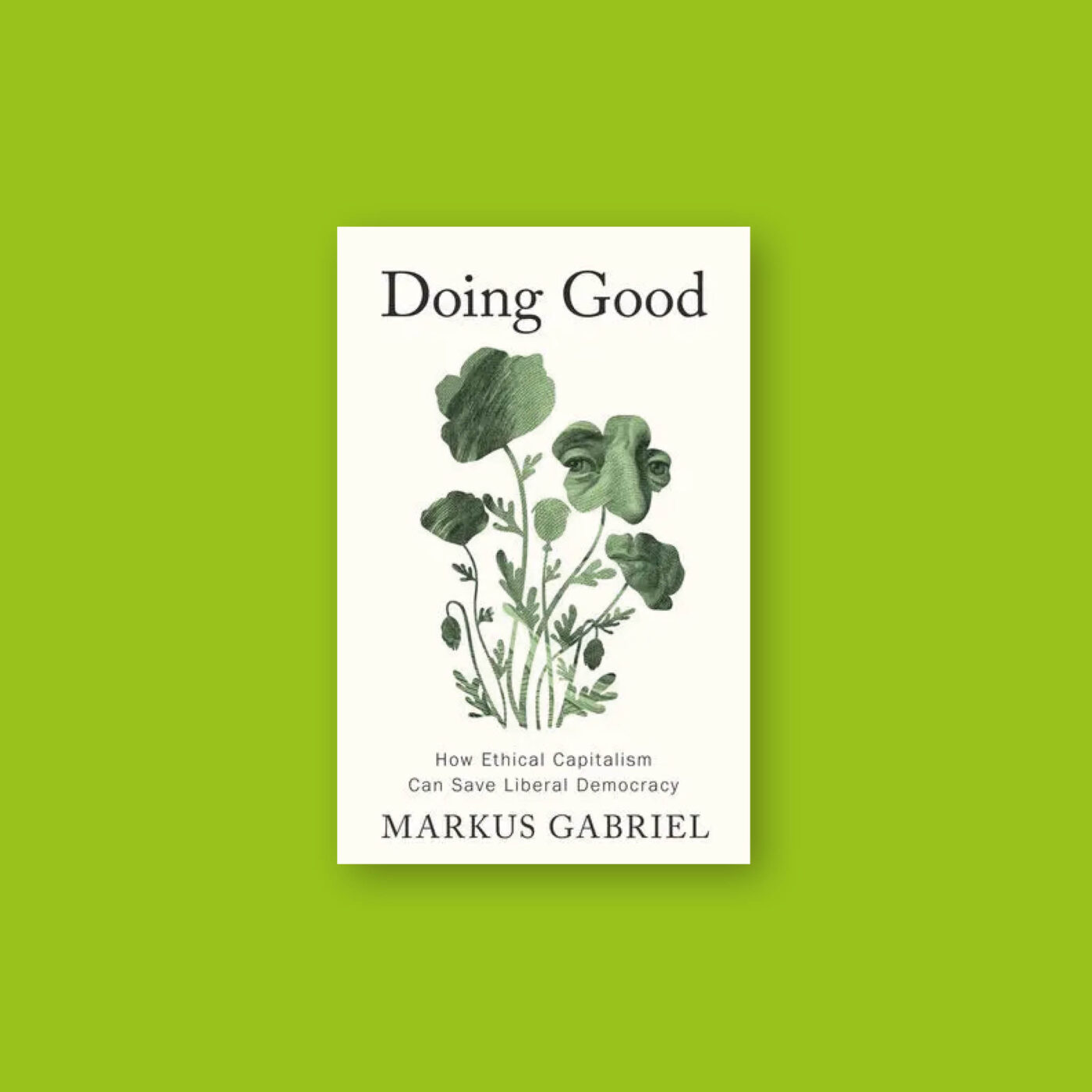
In this work, German philosopher and author Markus Gabriel explores what it means to act morally in the face of global challenges. He argues that morality cannot be reduced to rigid rules but firmly believes in the existence of “moral facts” that operate independently of context and are beyond debate. Gabriel critiques both moral relativism and absolute dogmas. Instead, he advocates for “situational universality,” where universal values like justice and solidarity must be applied in specific contexts. The individual’s responsibility, he asserts, must be viewed from a global perspective, particularly regarding consumption habits and climate protection.
Markus Gabriel regards capitalism as still the best path to achieving progress, prosperity, and development. However, he calls for its ethical reform, aiming for moral progress. He engages with the concept of ethical capitalism, which seeks to align economic actions with moral principles:
- Companies must assume social and ecological responsibility, committing to sustainable and just practices.
- Economic decisions should adhere to moral standards, such as fair labor conditions, environmental protection, and equitable resource distribution.
- Consumers bear moral responsibility to support ethical products and businesses that promote sustainability and social justice.
A key theme is the influence of modern technologies, such as artificial intelligence, which raise new ethical questions. Gabriel emphasizes that technologies are not neutral and require ethical reflection.
The core message is a shift in perspective: ethical obligations should not result in restrictive regulations but inspire business models that are both profitable and value-creating. The book is both inspiring and thought-provoking, fostering a sense of optimistic introspection. However, the chapter on practical implementation ideas is somewhat underwhelming and abstract, reflecting Gabriel’s strengths as a philosopher more than as an economist.
The work calls for an ethics that connects individual actions with structural changes. Gabriel’s book invites readers to critically reflect on their own responsibilities and actively contribute to a better world.
Doing Good is an accessible yet profound exploration of modern ethics. It offers a fresh perspective on the possibilities for transforming economy and society while encouraging readers to reconsider their own responsibilities in a globalized world. Despite some questions about practical implementation, the book is a valuable contribution to the current debate on the future of our economic system and democracy.